The gear guide
What to bring
Work clothes
Options in clothing are essential, and having more than one change of clothes for a given day is preferable. In the morning it's often cool and the corn is soaked with dew; by afternoon you could have full sunlight and temperatures in the mid-to-upper 90s. Corn leaves are abrasive and will cut up whatever skin you leave exposed, so you'll want to cover up.
A trip (or several) to the thrift store before the season is recommended — these are clothes and shoes that may wear out over the course of the season, so buying used is not a bad idea. Notable items to acquire:
- Long-sleeved, light-colored work shirts. Cotton or a light, sturdy, breathable material is ideal — sun shirts made for fishing and hiking work well too. Make sure the sleeves are plenty long so they don't ride up during the workday; you'll want to tuck them in and tape them to your work gloves without leaving your wrist exposed.
- Long pants — loose fitting, light, and sturdy. Khakis or scrub bottoms work fine. Yoga leggings or even skirts work well also.
- Shoes — four pair total, two each for mud days and dry days. Shoes tend to blow out over the season, and a mid-day change between fields can be a lifesaver. Comfortable hikers, runners, or old sneakers are fine; cleats can be nice on muddy days. Closed toe is a requirement, and break them in beforehand — if you notice rubbing or tightness on a walk, you'll really notice it after 10 miles on hard, uneven ground.
- Lots of socks — plan on going through two pair a day. Thick, calf-height wool hiking socks perform well in both heat and wet and hold up to the walking. Cotton is fine too, it just wears thin eventually. Thin socks mean more blisters.
- Hiking gaiters — not required, but a solid recommendation. They keep mud, leaves, and rocks out of the top of your shoes and protect your laces, which otherwise gum up with dirt fast.
- A full-brim hat — breathable, with a brim stiff enough not to flop into your vision. Straw hats work great. A chin strap is smart for windy days.
- Bandanas or a spare tee to cover your face. In tall corn it's advisable to protect your nose and ears — the best trick is pulling a t-shirt over your head so it covers both.
- Rain gear — mainly for mornings when heavy dew coats the corn. Without it you'll be soaked in minutes, and if it's even a little cool out, it gets chilly fast. A rain jacket and rain pants work fine.
Field items
A basic list of what you'll want in the field with you each day. Small-town grocery selection near the fields is usually limited and expensive, so do your shopping before you come to camp — there's time during the season to hit a bigger town nearby for anything you run out of.
- Non-perishable food — nuts, trail mix, canned tuna, canned soups, crackers, energy bars. Don't haul perishables with you; buy those locally once you're settled into camp.
- Duct tape — you'll use it pretty much every day to tape your gloves to your sleeves, and it comes in handy for everything else.
- Electrolyte packets (Emergen-C or similar) — battle tested, and a lifesaver on a hot day when you've been sweating. Figure at least a packet or two per workday.
- An insulated water bottle — a Gatorade bottle serves fine, but stainless steel keeps ice cold all day in direct sun. Cool water is always available in the fields on the crew truck.
- A basic sewing kit for mending clothes and gear.
- A first-aid kit — blisters and hot spots build over days of walking and need care, plus the usual cuts, scrapes, and bug bites. Carry a good triple-antibiotic ointment: left untreated, a little hotspot can turn into an infection that ruins your season.
- Sunscreen — essential. Exposed skin burns quickly, and on some days you can burn right through a shirt.
- Sunglasses — eye protection is required in the field. Safety glasses are provided, but you may prefer your own; just make sure there's side protection to keep corn leaves out.
- Antifungal cream (clotrimazole) — hot days, sweat, and miles of walking lead to chafing, and severe chafing can end a season. Some people use Gold Bond; treating and pre-treating with clotrimazole keeps it under control.
- Sharpies — you'll need one every day during firsts for marking the tag at the front of your block. They work best on wet tags.
- A sturdy power bank — for keeping devices charged when an outlet isn't nearby.
Camping items
You're free to stay wherever you choose, but most years the majority of the crew opts to camp together. This is by no means comprehensive — bring whatever you need to camp comfortably for several weeks.
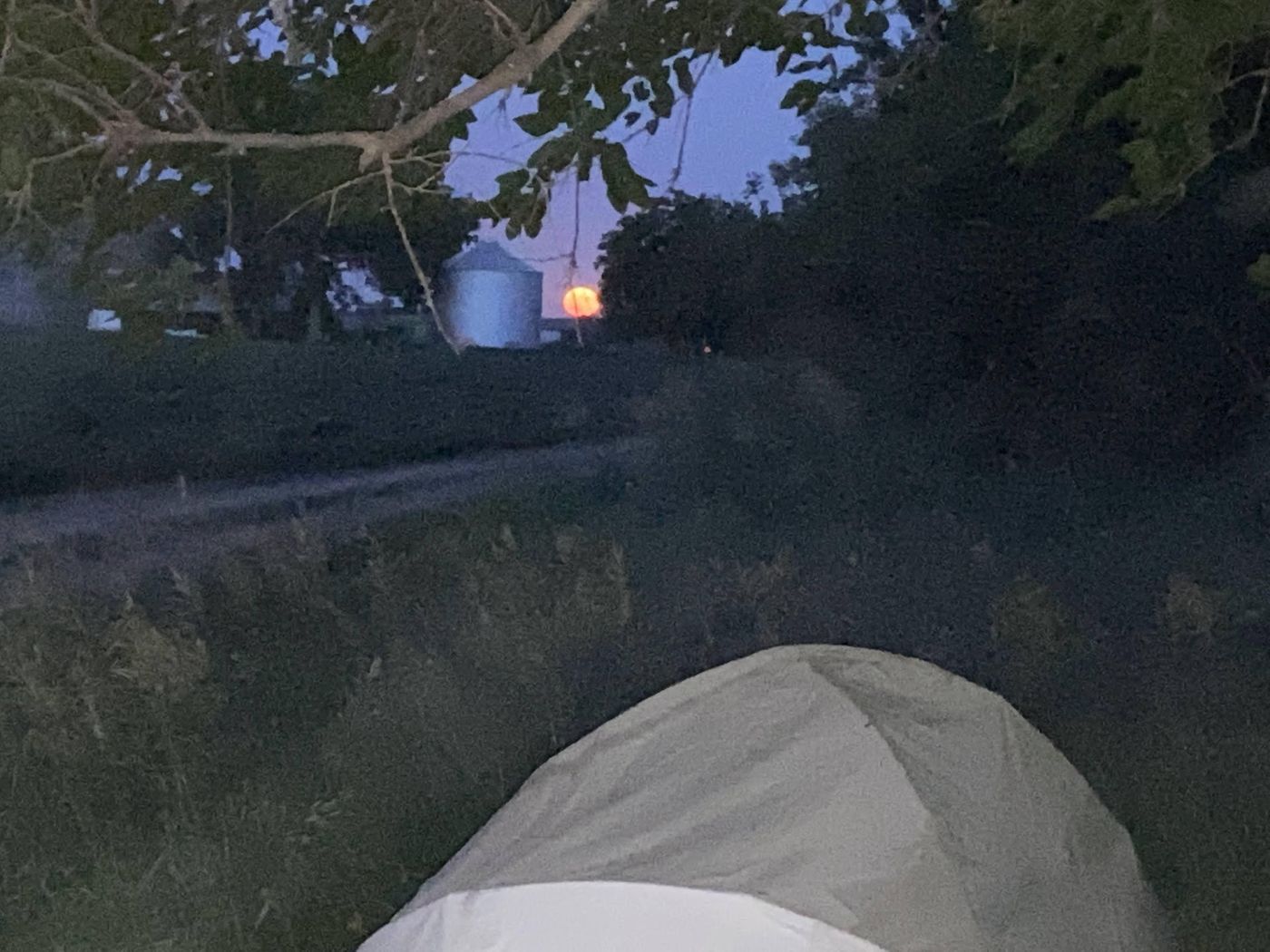
- A tent. Some people sleep in their cars, but a tent offers better protection from bugs at night. Don't go too big — a three-person tent with a vestibule is plenty for one person camping long-term. Big tents catch wind like a sail, and you can almost guarantee at least one storm with 25+ mph gusts. Stake it down.
- A ground pad. Inflatable mattresses are popular; foam camping pads hold up well. Sleeping straight on the ground is survivable but not recommended — with these workdays you'll want real rest.
- A lightweight sleeping bag. Nights range from the low 50s to the low 80s. Most are comfortable, but you'll want something that covers the chilly ones and vents on the warm ones. A pillow too.
- A camping fan — good for warm, still nights. Modern ones double as a power bank and lantern.
- A headlamp — for hands-free setup in the dark. Rechargeable with a red-light mode is ideal.
- A few tarps — ground cloth under the tent (keep the edges tucked inside the tent footprint or they'll funnel rainwater under you), extra shade, or gear cover in a storm.
- A mesh-screened canopy tent — some years unnecessary, but when the bugs are bad, it's a lifesaver.
- A camp stove. Propane is cheap and easy to find.
- Cooking kit — pot, pan, coffee pot, plates, spatula, kitchen knife, cutting board, silverware, tin foil, plus a wash brush, dish soap, and a basin.
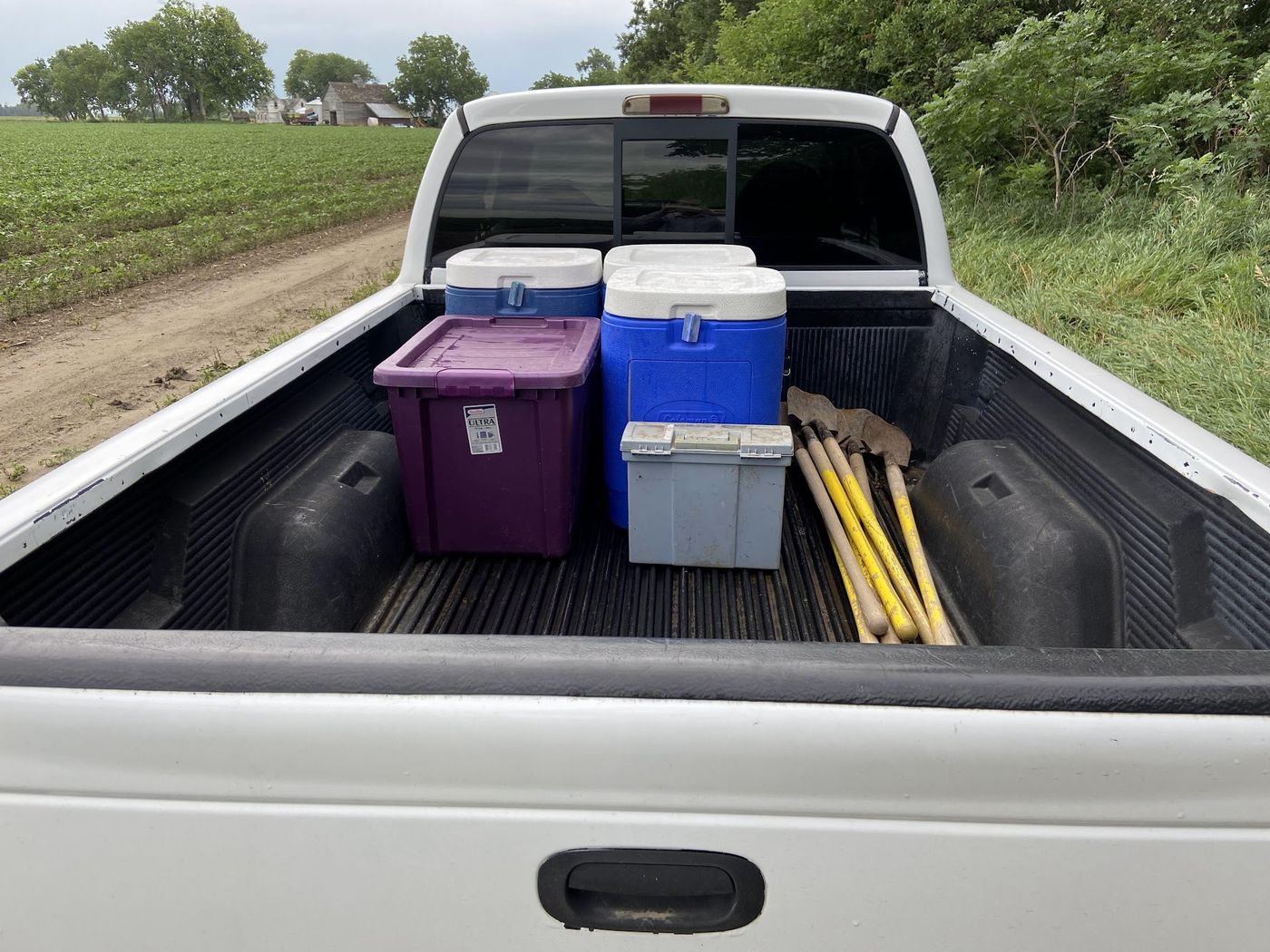
- A cooler and a dry box — nothing fancy, just enough to keep perishables cold and dry goods protected from critters.
- A camp chair and a table. Chair highly recommended; table optional but nice.
- Bug spray — the all-natural stuff if you like, or something with DEET that actually works.
- Soap, sandals, and a towel for showering.
- Your toiletry kit — toothbrush, mouthwash, and any meds you need, such as antihistamines or NSAIDs.
- Rope or parachute cord for dry lines and hanging things.
- A camping knife, small saw, and/or a hatchet.
- A swim suit — most seasons there's a pool or swimming hole nearby. Great way to cool off after a hot day.