The work, explained
What is corn detasseling?
Detasseling, explained
Corn detasseling is a seasonal farm labor job that takes place in the United States during July, primarily across the Midwest. It plays a crucial role in the seed corn hybridization process. Unlike field corn, which is grown as a commodity crop for food, fuel, and other purposes, seed corn is specifically cultivated to produce seeds for future crop growth.
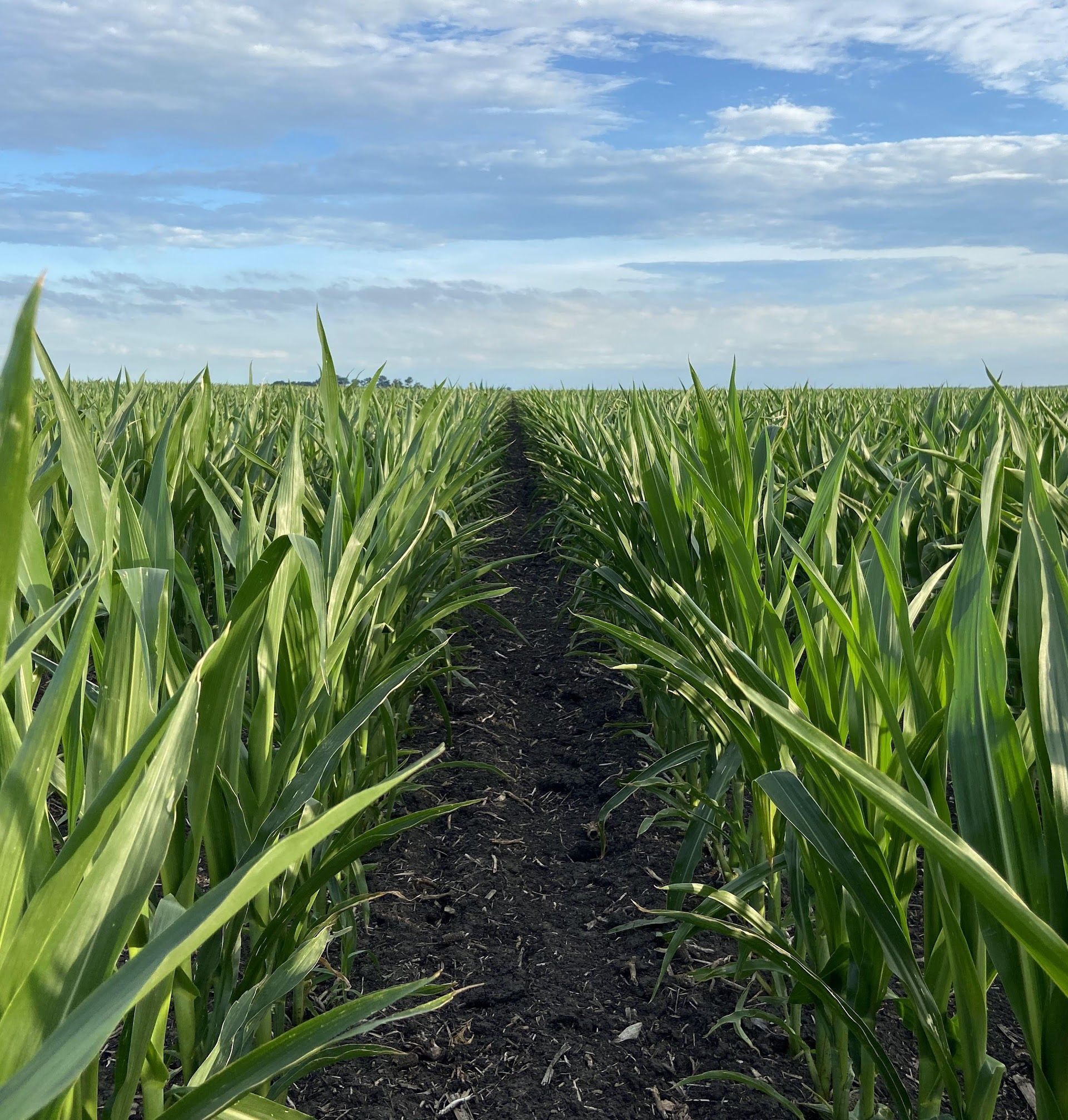
In seed corn production, two distinct varieties of corn are planted to create a hybrid seed. Hybrid seeds offer several benefits, such as consistently higher germination rates and crop yields. In practice, hybridization involves planting one row of a male corn variety followed by four rows of a female corn variety, repeated throughout the entire field.
Corn plants are naturally hermaphroditic — they have both male and female parts. The tassel, an amber shoot of pollen at the top of the plant, is the male part, while the silk, the hair-like strands visible when shucking a corn cob, is the female part. Each silk thread corresponds to a single corn kernel, formed through its own pollination event.
To produce hybrid seeds, pollen from the male plants must pollinate the silk on the female plants. To make sure that happens uniformly, the tassels are removed from every female plant — by machine, and then by hand. Once detasseled, the female plants can only be pollinated by the male variety, producing the hybrid seed the company is after.
The work of detasseling
Our detasseling crew is responsible for entering the fields and removing the tassels the machines leave behind. We work for the seed corn company that manages the entire production process from planting to harvest — in past seasons our acreage has been contracted with major seed producers including Beck's Hybrids and Hartung Brothers.
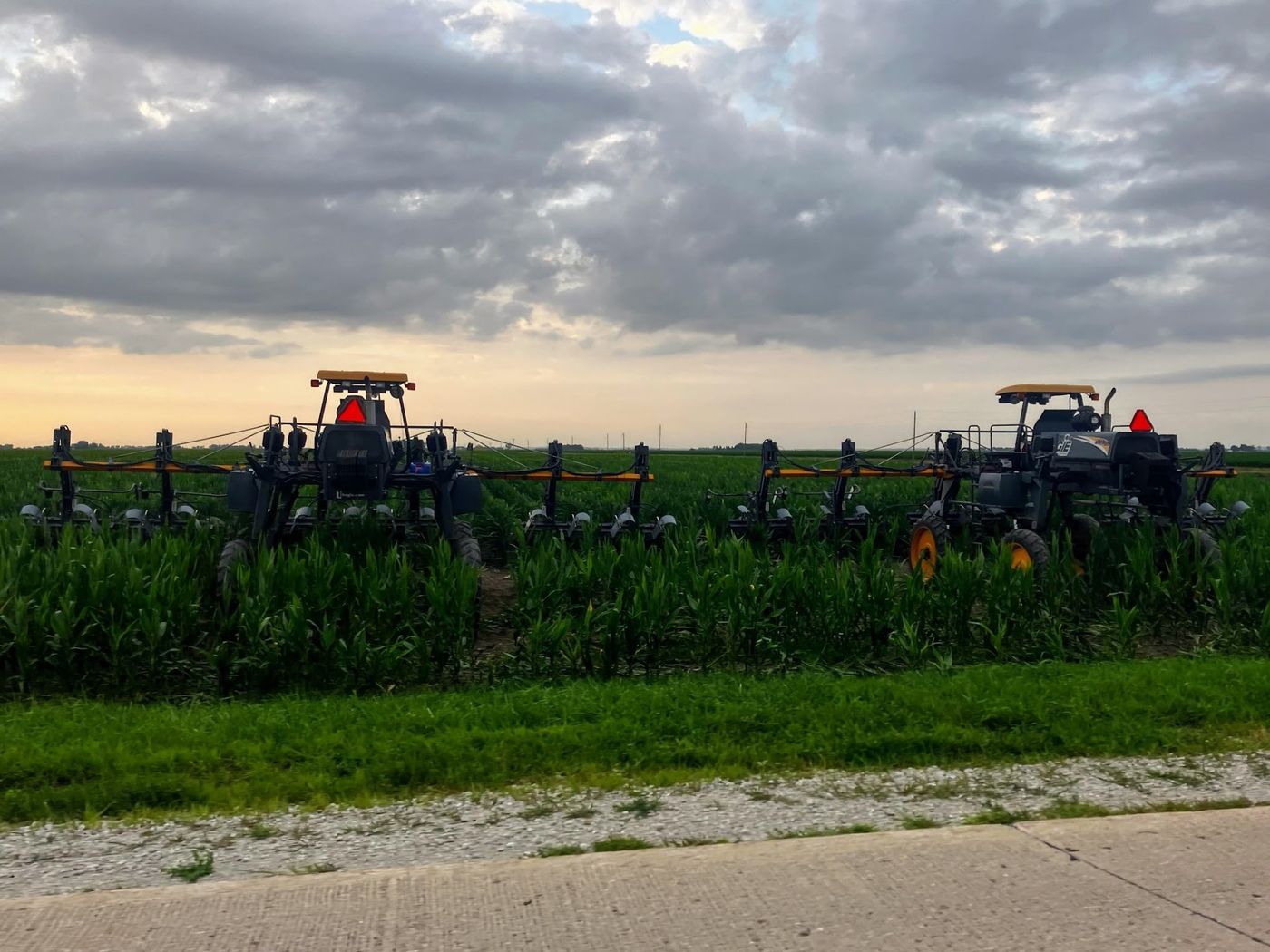
When a field reaches the stage where pollination is imminent, it's called "hot": the silk is starting to show, and the tassels will soon emerge. The seed company first mows the field — a tractor with spinning blades trims the top inch of the leaves on the female plants, which doesn't damage them but triggers the plants to rapidly send up their tassels. After a day, the company runs a puller through — a tractor with upward-spinning wheels that removes 75 to 90 percent of the tassels.
Then it's our turn. The hand work runs in two stages: firsts and seconds.
- Firsts is the initial pass, focused on the tassels the puller missed at the top of the plant. This is also when you claim your blocks, which determines your pay.
- Seconds comes after a day's wait, which lets any missed tassels grow tall enough to spot. You revisit your claimed blocks and work the plant's whole verticality — tops, mids, and lows — with emphasis on the tops and mids. Seconds is also called the clean-up: if enough tassels come out for the block to pass, you're done with it.
Tassels are classified as tops, mids, and lows. Tops sit in the standard, taller parts of the field; mids are on plants that matured more slowly; lows are small plants under a foot high whose tassels can hide near the ground. Suckers — side shoots from the base of mature plants — carry tassels too, and they all have to come out.
Compensation — we pay more
Green Mile uses a piece-rate model: your pay is based on the work you complete. Experienced detasselers can earn over $30 per hour, and rookies often make more than $15 per hour. Pay is determined by the number of blocks detasseled, with each block averaging around $75.
A block consists of four rows of female corn with a row of male corn on either side. Blocks vary in length but are generally half a mile long. An experienced detasseler usually finishes a block in about an hour on the first pull, and a little less on the second.
Payment for a block comes when the field passes inspection. After the field is cleaned, inspectors check it: if 99.7% or more of the tassels are out, the field passes and we're paid. If it doesn't pass, we go back in and clean until it does — that standard is what keeps the pay high and the work honest.